
Multimodal Perception and Decision Systems
Multimodal models that combine images, video, audio, and text, and decide when the visual evidence is sufficient to act. Robots look again before acting, and clinical models defer when uncertain.
The Vision Systems and Intelligence Laboratory at the University of Arizona builds vision systems that make reliable decisions with limited information and limited compute. We study how machines use images, video, and multimodal data to perceive, reason, and act, with applications in surgical and ophthalmic imaging, robotics, and intelligent sensing.
Join the lab. Prospective Ph.D., M.S., and undergraduate researchers and visiting scholars are welcome to email a CV and a short note on their research interests. eungjoolee@arizona.edu
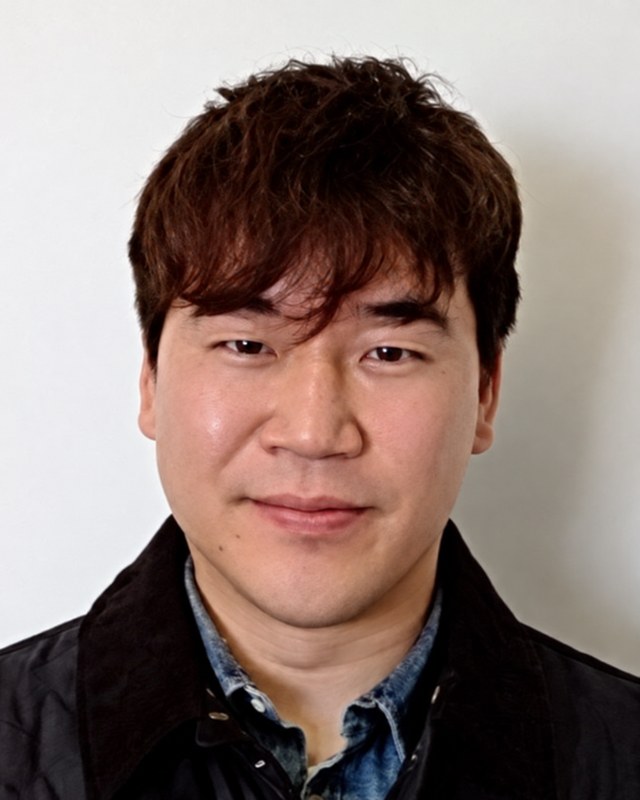
Eungjoo Lee, Ph.D.
Assistant Professor, School of Electrical, Computing, and Software Engineering
Division Chief of Ophthalmic AI, Department of Ophthalmology and Vision Science
Director, Vision Systems and Intelligence Laboratory
Eungjoo Lee is an Assistant Professor in the School of Electrical, Computing, and Software Engineering at the University of Arizona and Division Chief of Ophthalmic AI in the Department of Ophthalmology and Vision Science. In summer 2026 he was a Visiting Researcher at the Schepens Eye Research Institute of Massachusetts Eye and Ear, Harvard Medical School. Before joining Arizona he was a postdoctoral research fellow in the Department of Radiology at Massachusetts General Hospital and Harvard Medical School, affiliated with the Martinos Center for Biomedical Imaging.
He received his Ph.D. in Electrical and Computer Engineering from the University of Maryland, College Park, and was a research intern at the U.S. Army Research Laboratory. He is affiliated with the Arizona Center for Telemedicine and Digital Health, the BIO5 Institute, the University of Arizona Cancer Center, and the Center for Semiconductor Manufacturing.
JournalsNature Machine Intelligence, Medical Image Analysis, Pattern Recognition, IEEE TPAMI, IEEE TMI, IEEE JBHI, IEEE TMC, IEEE TC
ConferencesCVPR, NeurIPS, ICML, ICLR, ECCV, MICCAI, AAAI, AISTATS, IPCAI, ISBI, ICIP, ICPR, ICASSP, WACV, ACCV
Multimodal models that combine images, video, audio, and text, and decide when the visual evidence is sufficient to act. Robots look again before acting, and clinical models defer when uncertain.

Ophthalmic imaging, surgical video, human movement, and brain connectivity. We interpret retinal scans, estimate camera motion inside the body, track human pose over time, and build tools that assist clinicians during a procedure.

Models that hold up under distribution shift and still run on the hardware available at the bedside or in the field. We study test-time adaptation and knowledge distillation toward this goal.